Engineering + Biology + AI

Research

Living systems change through development, aging, and regeneration. We develop soft, adaptive bioelectronics that remain connected to living tissues as they change, enabling long-term measurements of electrical activity.

Rooted in bioelectronics, materials science, mechanics, and AI, our research brings together electrophysiology and molecular measurements to connect new tools with biological questions.

Our goal

Build tools. Understand change. Guide intervention.

01 · Map

Adaptive interfaces

Bioelectronics
Materials and mechanics

02 · Understand

Neural trajectories

AI
Molecular identity and electrophysiology

03 · Modulate

Informed modulation

Biological context
Functional response

Engineering and biological discovery inform each other.

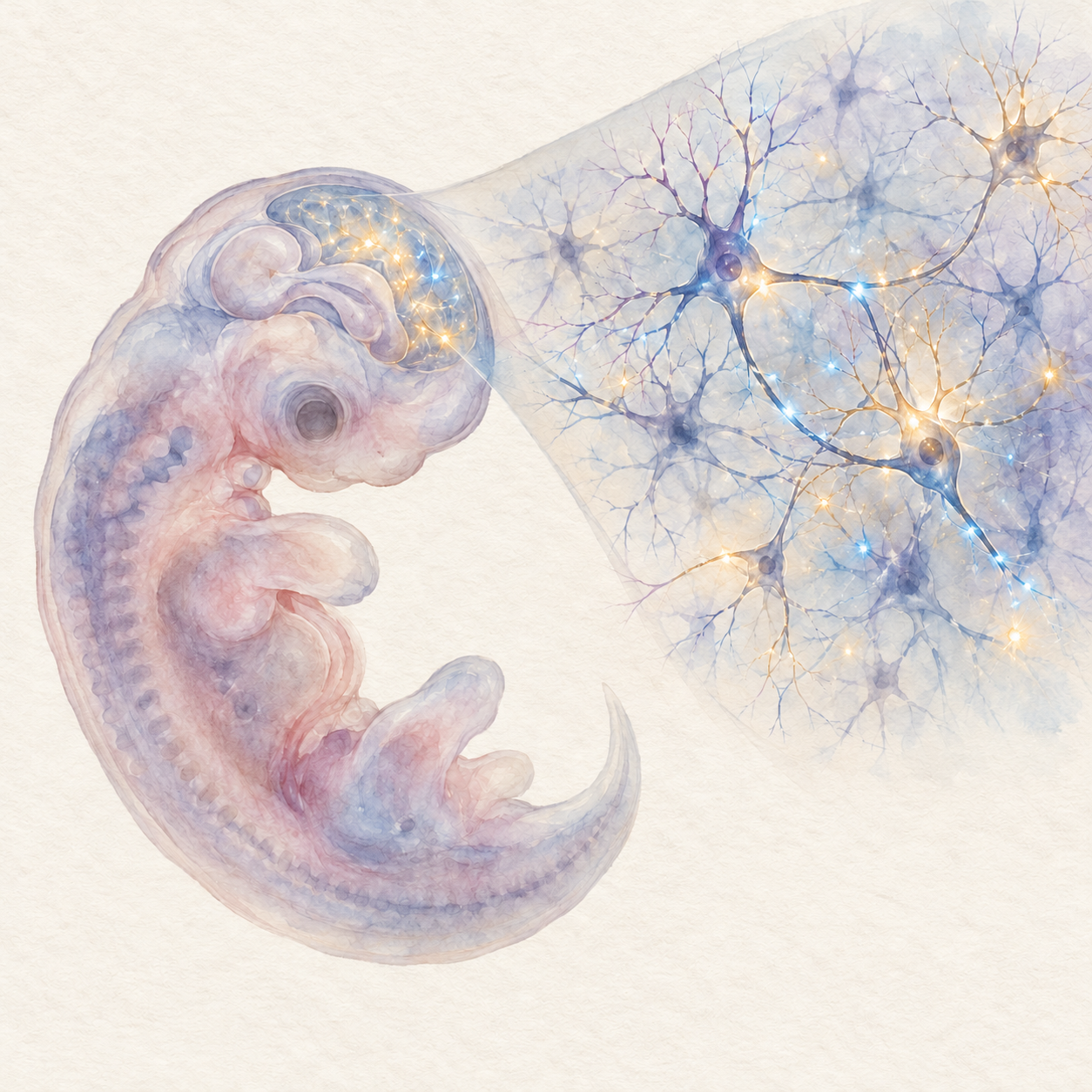
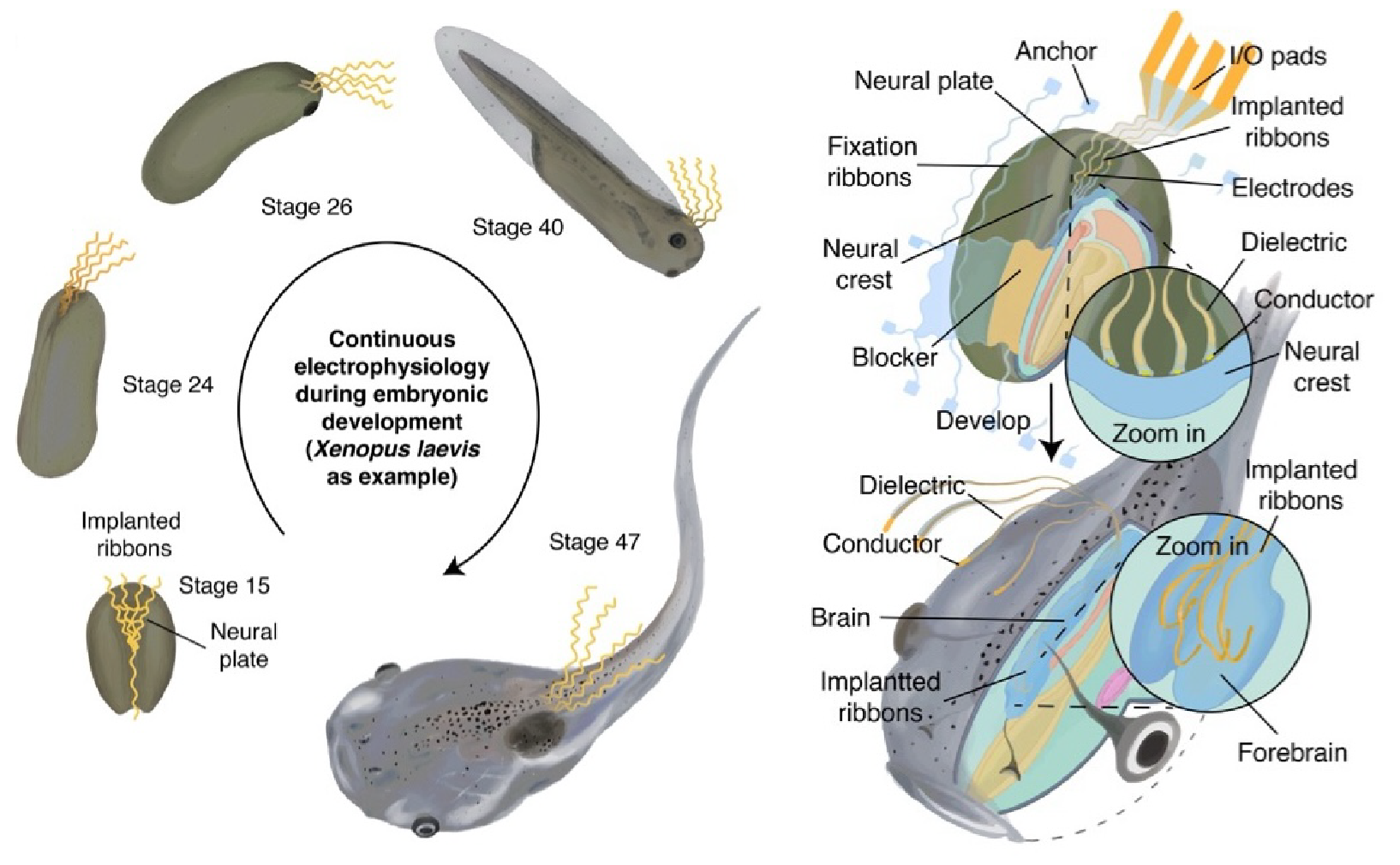
Watercolor concept illustration of a developing embryo with neural activity in the brain and an enlarged view of neurons.

Map changing living tissues

How can electronic interfaces remain connected as living tissues change?

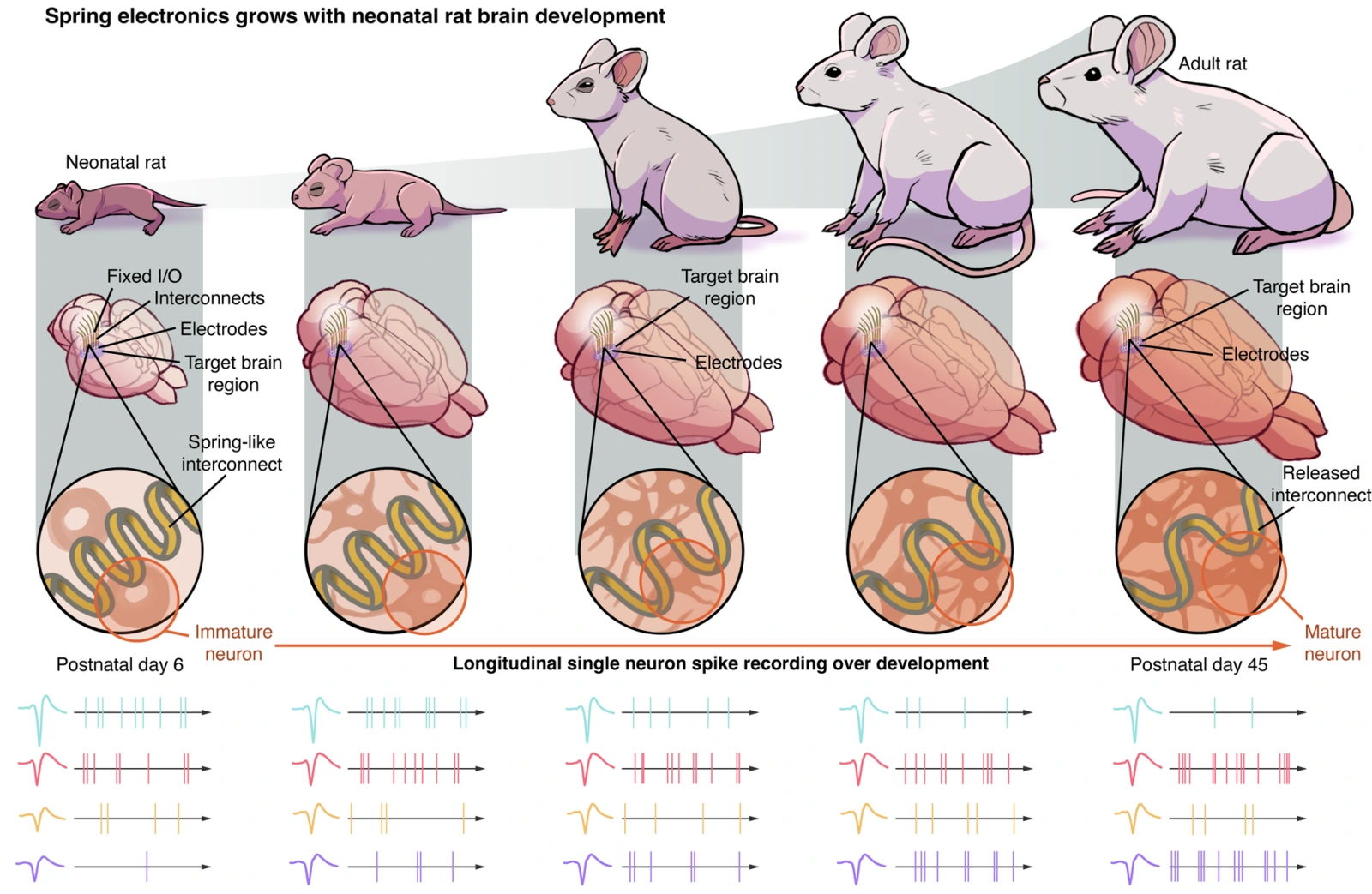
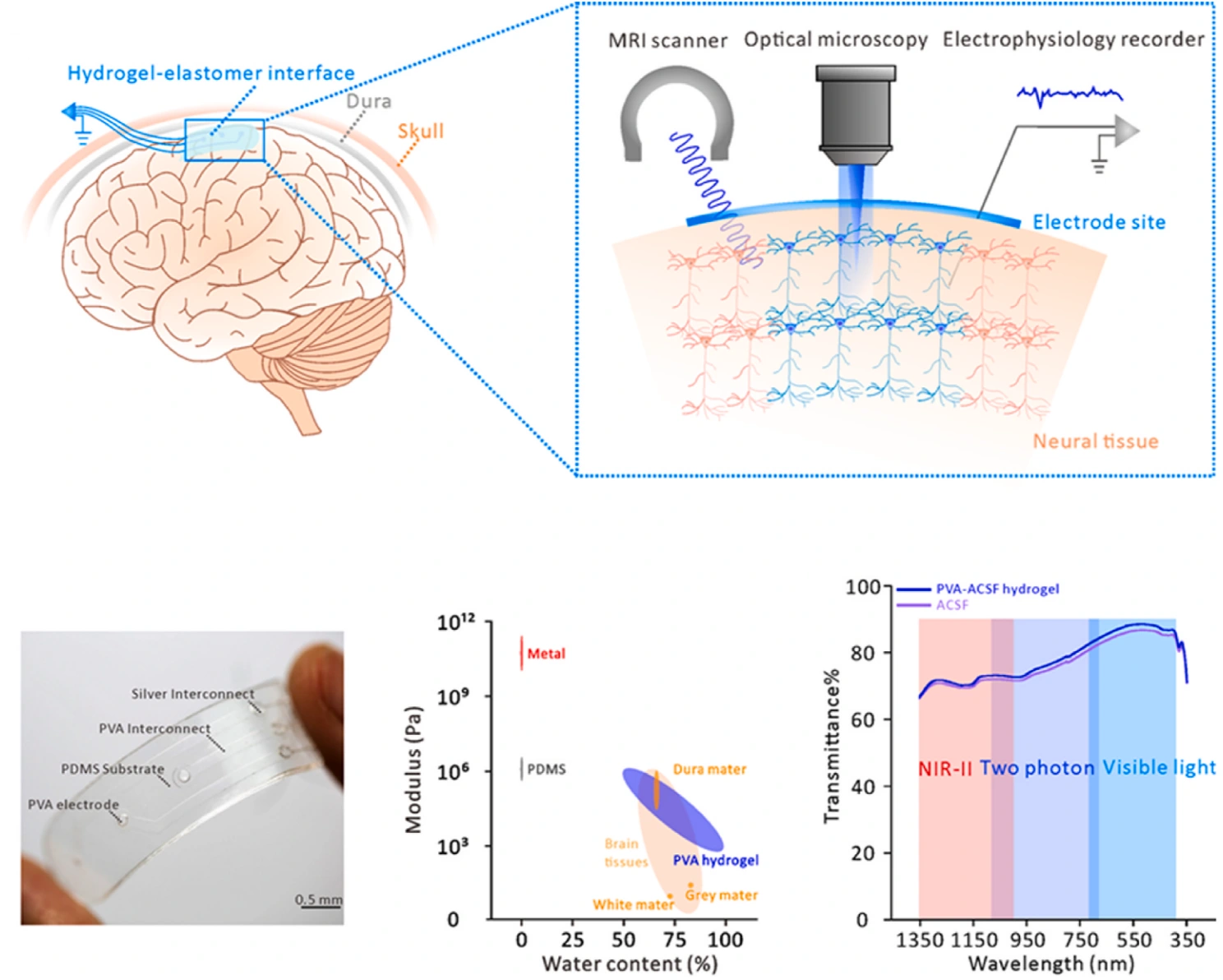
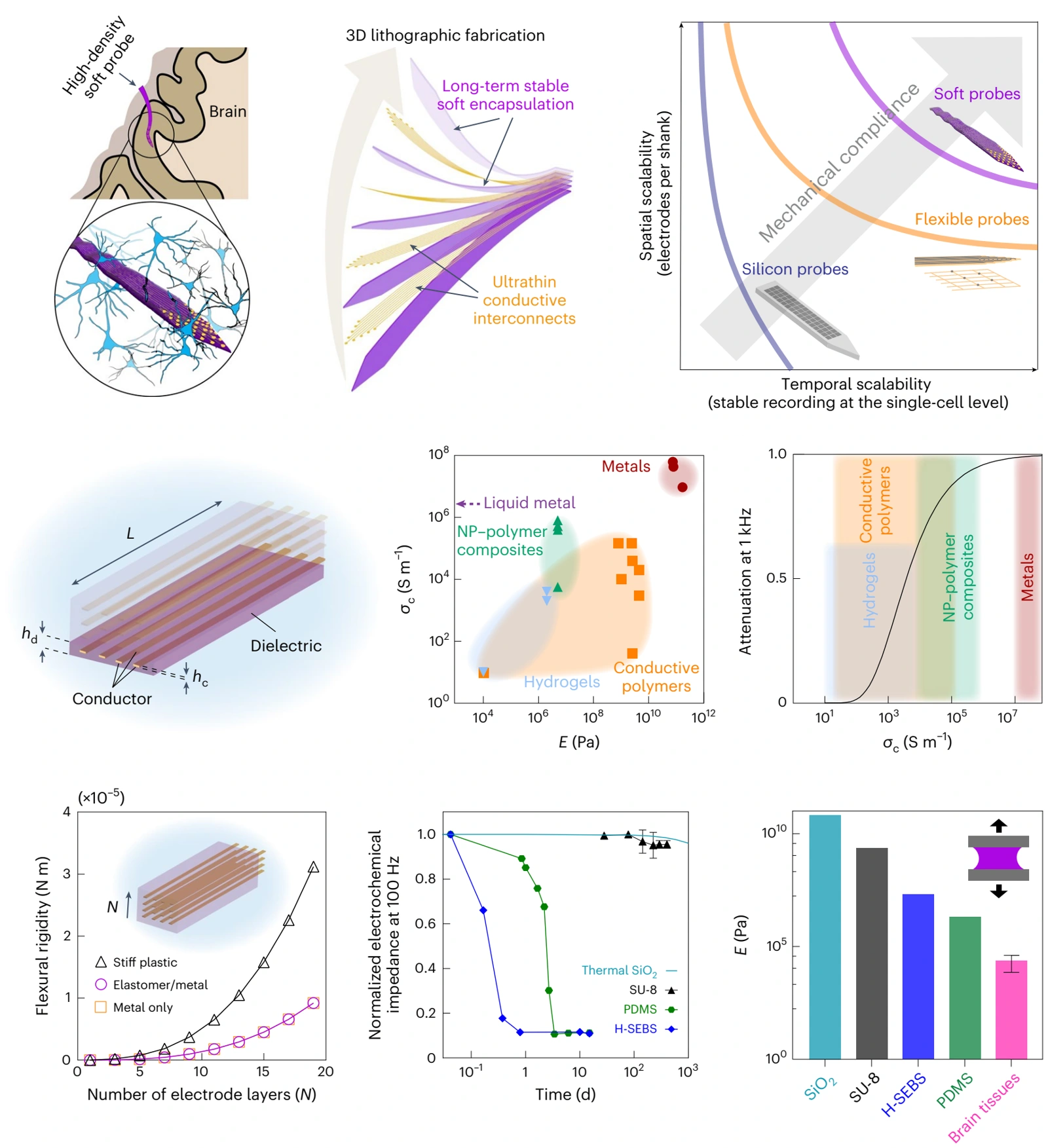
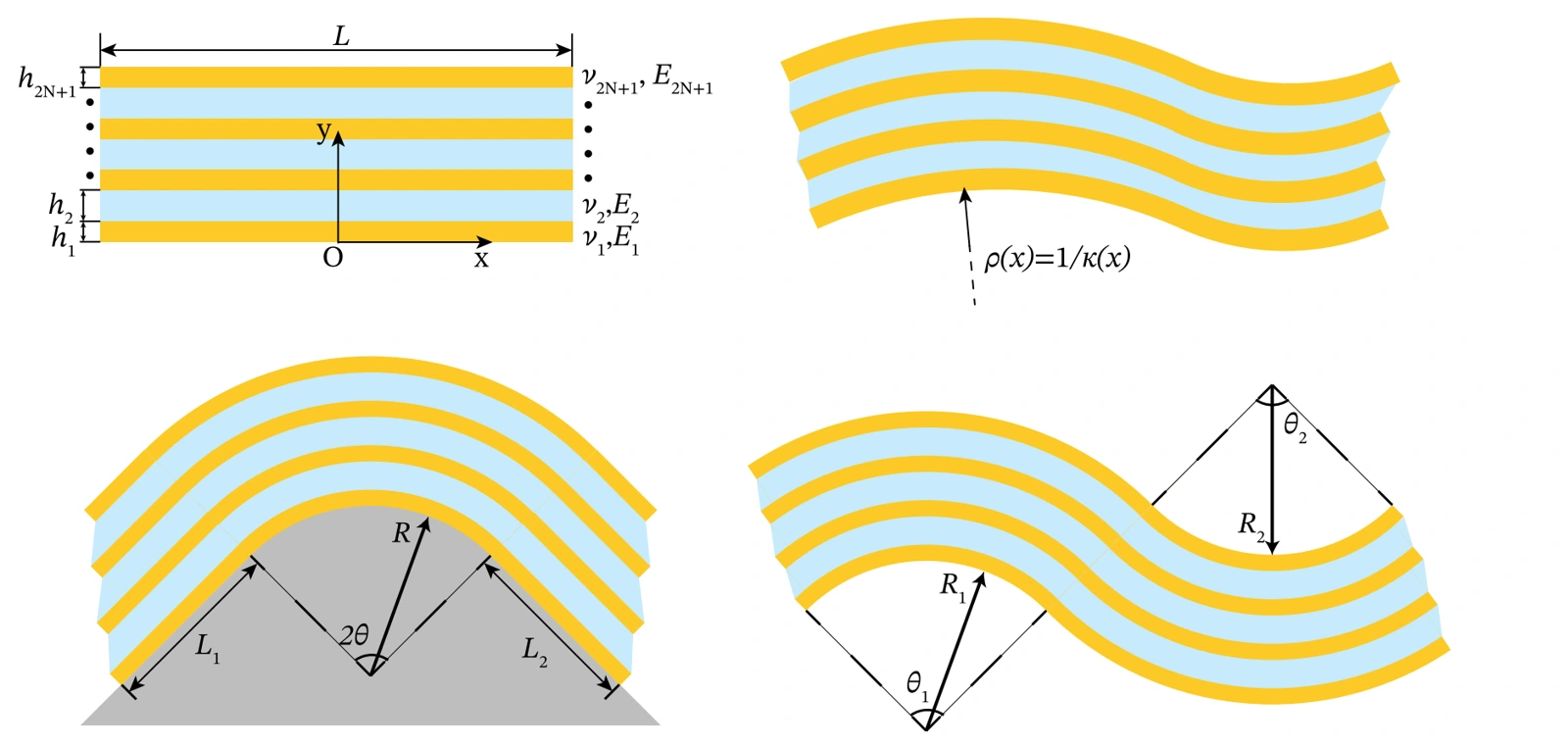
Living tissues change in mechanical properties and cellular organization. Electronic interfaces need to accommodate these changes to provide a consistent view of biological activity over time. This challenge connects materials, mechanics, and electrical engineering.

Our work on Cyborg Embryos and Spring electronics demonstrates how soft, adaptive interfaces can support recordings during brain development.

In the future, we aim to develop next-generation bioelectronic interfaces that adapt to living tissues and expand what can be measured across time and scale.

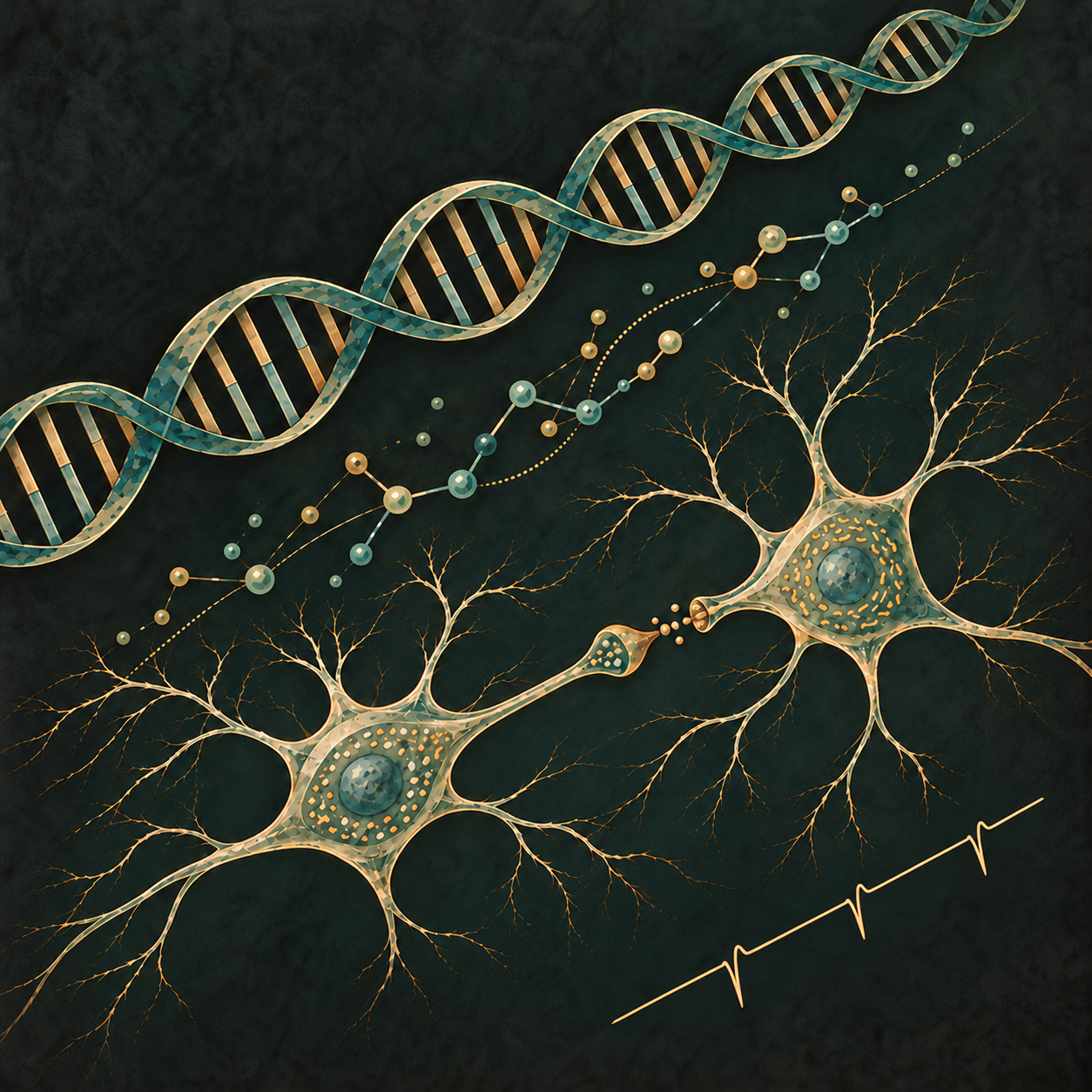
Teal and gold illustration of two communicating neurons, DNA and molecular structures, and three electrophysiological spikes on a shared diagonal baseline.

Understand cell dynamics

How do cellular electrical activity, identity, and tissue organization shape function over time?

Living tissues function through interactions among cells as they develop and change. In the nervous system, these interactions take the form of electrical and molecular communication among neurons within evolving circuits. Following neural activity over time helps connect changes in individual cells with the organization and function of neural networks.

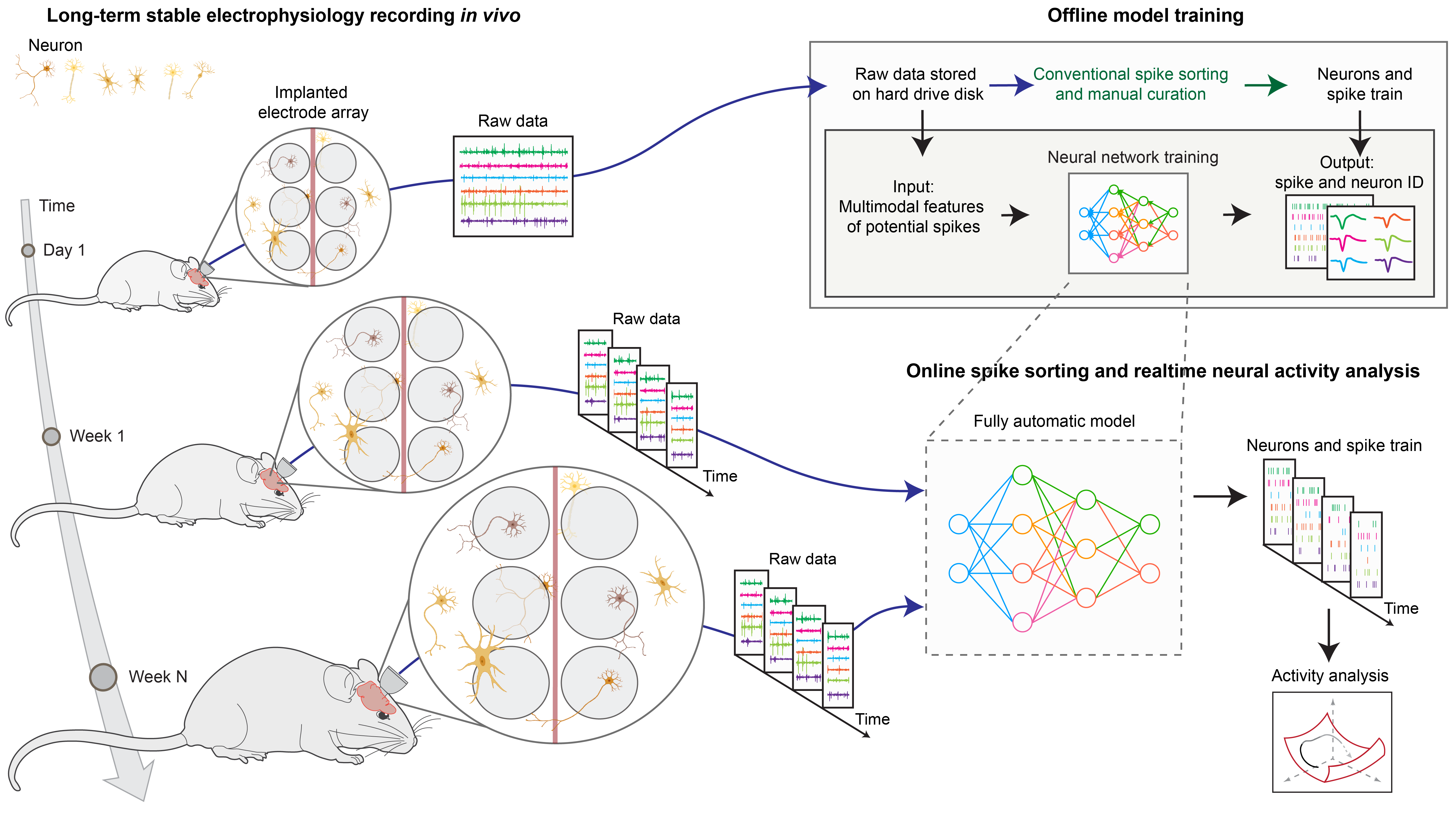
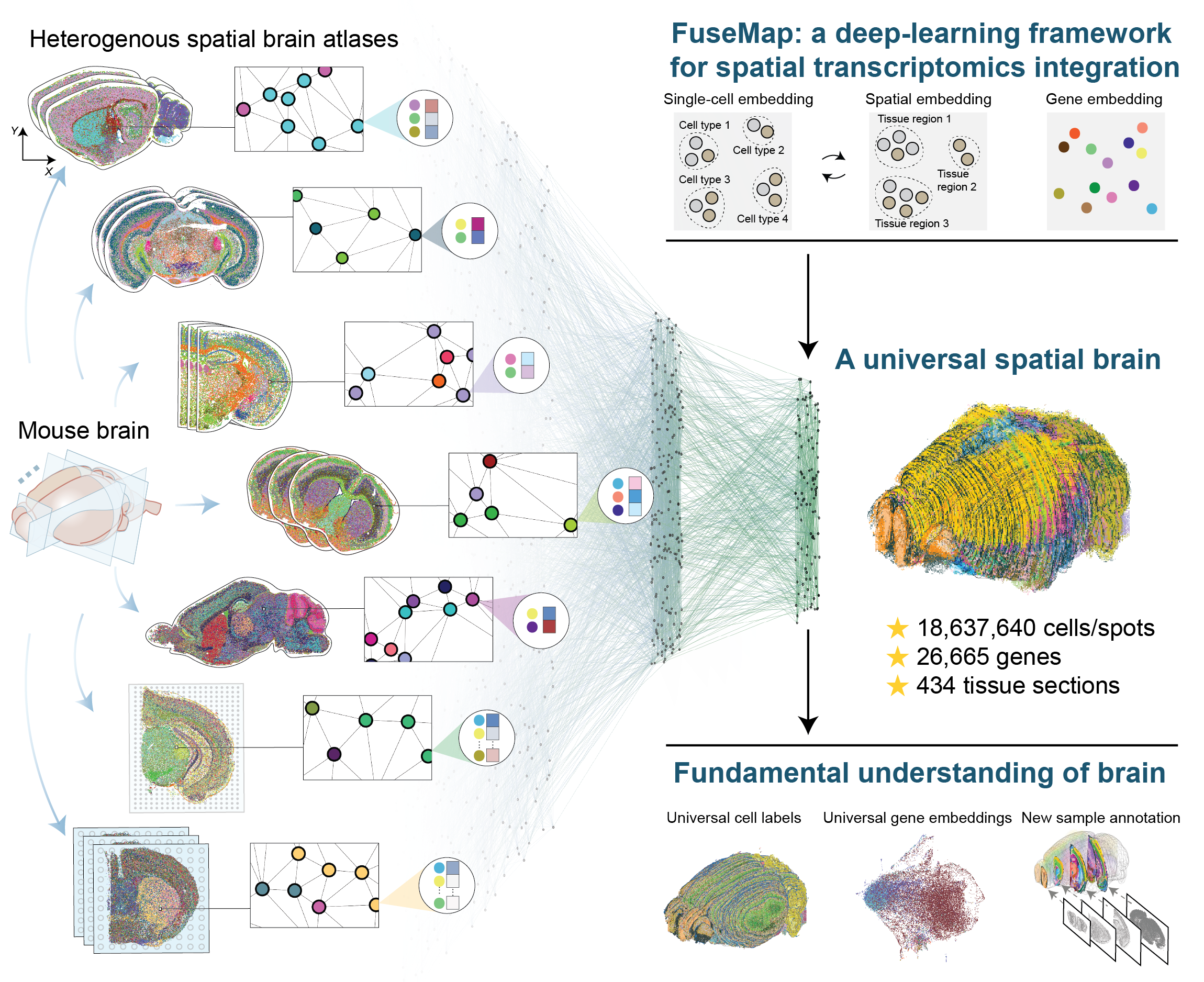
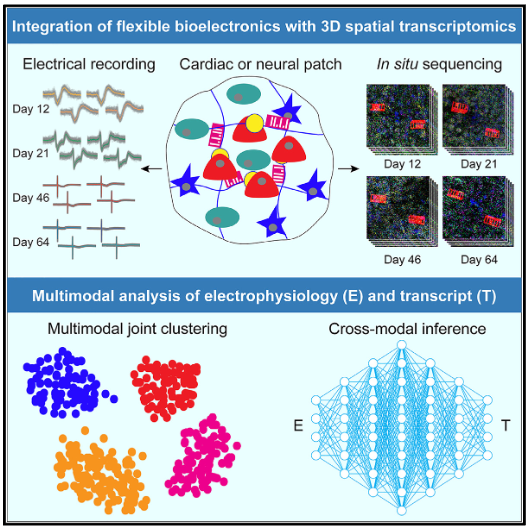
Our work (AutoSort; FuseMap) brings together electrophysiology and molecular measurements, leveraging AI to interpret biological activity across time and scale.

In the future, we aim to uncover how neural activity and cellular identity relate to the emergence of circuit function and how it changes over time.

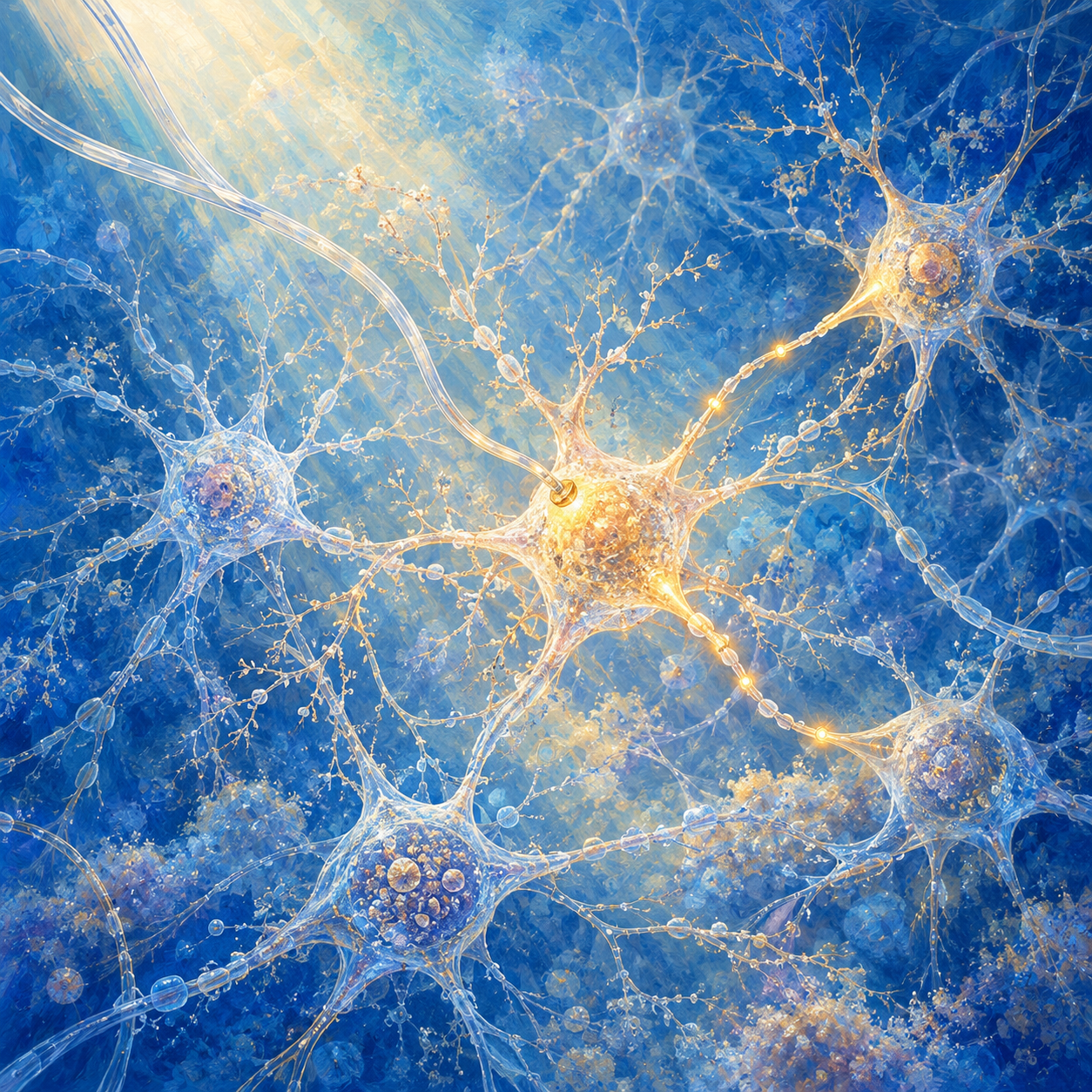
Blue and gold conceptual illustration of a soft bioelectronic interface acting locally on a target neuron, with activity highlights along selected connections in the surrounding neural network.

Guide precise modulation

What makes an intervention precise in a changing biological system?

The effect of a perturbation depends on the state of the cells and tissue in which it acts. Cellular activity, identity, and tissue organization shape that response. Precise modulation therefore requires an understanding of both the biological context and how stimulation is delivered.

Building on next-generation bioelectronics and a deeper understanding of changing living tissues, we aim to develop precise approaches to modulation. By combining measurement with intervention, we seek to track cellular responses over time and connect them with tissue function, guiding when, where, and how to interact with living systems.

Explore a shared question

Join us or collaborate